
Research
Every new challenge presents an opportunity for Aggies to blaze a trail, and in health care and medical research, those opportunities are vast. Our researchers are forging paths to discovery with a common goal in mind: improving human health.
Discoveries across disciplines
Our faculty and students work tirelessly in the pursuit of discoveries that impact health and health care delivery. We made a portable water purification device for military, created a diagnostic for tuberculosis that delivers results in minutes, built a condom that has the potential to end the transmission of HIV, and restored missing parts of the human face through artificial means. Explore the signature research programs and priorities across our colleges, centers and institutes:
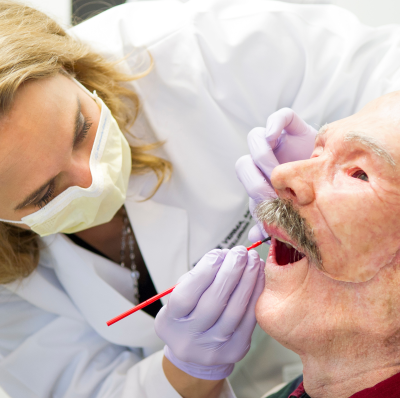
School of Dentistry research priorities
- Tooth development and genetics
- Dentin, bone and cartilage matrix biology
- Temporomandibular joint function, dysfunction and pain
- Implants, bone regeneration devices and devices to move teeth
- Stem cell applications for regenerative strategies and scaffold design
- Use of biomarkers to detect oral cancer
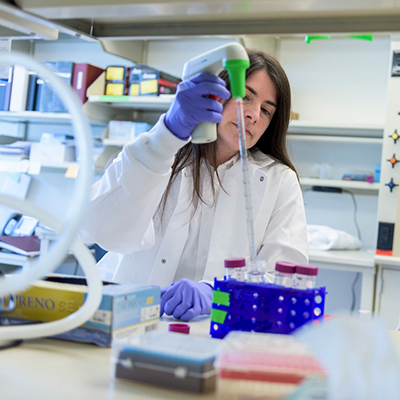
School of Medicine research priorities
- Brain, Behavior, Psychiatric and Neurological Disorders
- Biomedical Engineering and Regenerative Medicine
- Cancer, Cell and Developmental Biology
- Cardiovascular, Lymphatic and Metabolic Disease
- Genetics, Genomics and Networking Biology
- Infection, Immunity and Inflammation
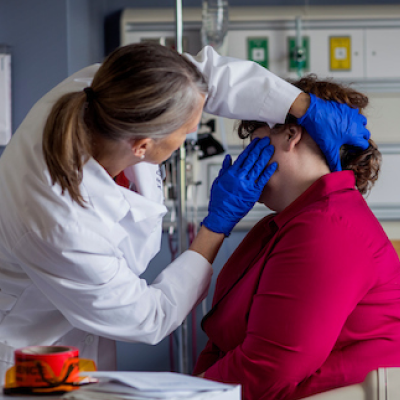
School of Nursing research priorities
- Forensic nursing
- Hispanic populations
- Childhood obesity
- Public health nursing
- Chronic diseases
- Vulnerable populations
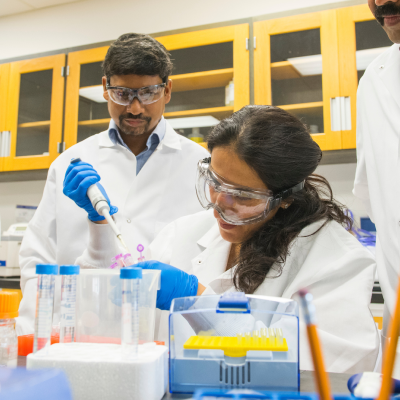
School of Pharmacy research priorities
- Product development and pharmacokinetics
- Molecular biology and cancer therapeutics
- Bioanalytical services
School of Public Health research priorities
- Prevention research
- Healthy aging through long-term care issues
- Health care quality and cost effectiveness
- Environmental exposures and adverse pregnancy outcomes
Institute of Biosciences and Technology research priorities
- Cancer and stem cell biology
- Environmental and genetic medicine
- Infectious and inflammatory diseases
- Translational cancer research
- Dentistry
- Medicine
- Nursing
- Pharmacy
- Public Health
- Biosciences & Technology
School of Dentistry research priorities
- Tooth development and genetics
- Dentin, bone and cartilage matrix biology
- Temporomandibular joint function, dysfunction and pain
- Implants, bone regeneration devices and devices to move teeth
- Stem cell applications for regenerative strategies and scaffold design
- Use of biomarkers to detect oral cancer
School of Medicine research priorities
- Brain, Behavior, Psychiatric and Neurological Disorders
- Biomedical Engineering and Regenerative Medicine
- Cancer, Cell and Developmental Biology
- Cardiovascular, Lymphatic and Metabolic Disease
- Genetics, Genomics and Networking Biology
- Infection, Immunity and Inflammation
School of Nursing research priorities
- Forensic nursing
- Hispanic populations
- Childhood obesity
- Public health nursing
- Chronic diseases
- Vulnerable populations
School of Pharmacy research priorities
- Product development and pharmacokinetics
- Molecular biology and cancer therapeutics
- Bioanalytical services
School of Public Health research priorities
- Prevention research
- Healthy aging through long-term care issues
- Health care quality and cost effectiveness
- Environmental exposures and adverse pregnancy outcomes
Institute of Biosciences & Technology research priorities
- Cancer and stem cell biology
- Environmental and genetic medicine
- Infectious and inflammatory diseases
- Translational cancer research
Turning inventions into lifesaving treatments
Innovation that occurs in a lab is great, but patients won’t benefit unless it is taken to the bedside. Our goal is to close the gap between new knowledge and new therapies by making invention an integral component to our research program. Explore some of the ways our researchers are translating discoveries from bench to bedside:


Groundbreaking Engineering Health Initiative
Texas A&M is the meeting place for the brightest minds in engineering and health care. Here we have created the nation’s first comprehensive educational program to fully integrate engineering into all health-related disciplines.
Explore Engineering HealthA holistic approach to research
As a member of Texas A&M University, one of the largest research universities in the United States, with 19 colleges and schools under its umbrella, our faculty and students receive a wide array of transformational research opportunities and collaborations.
Better together
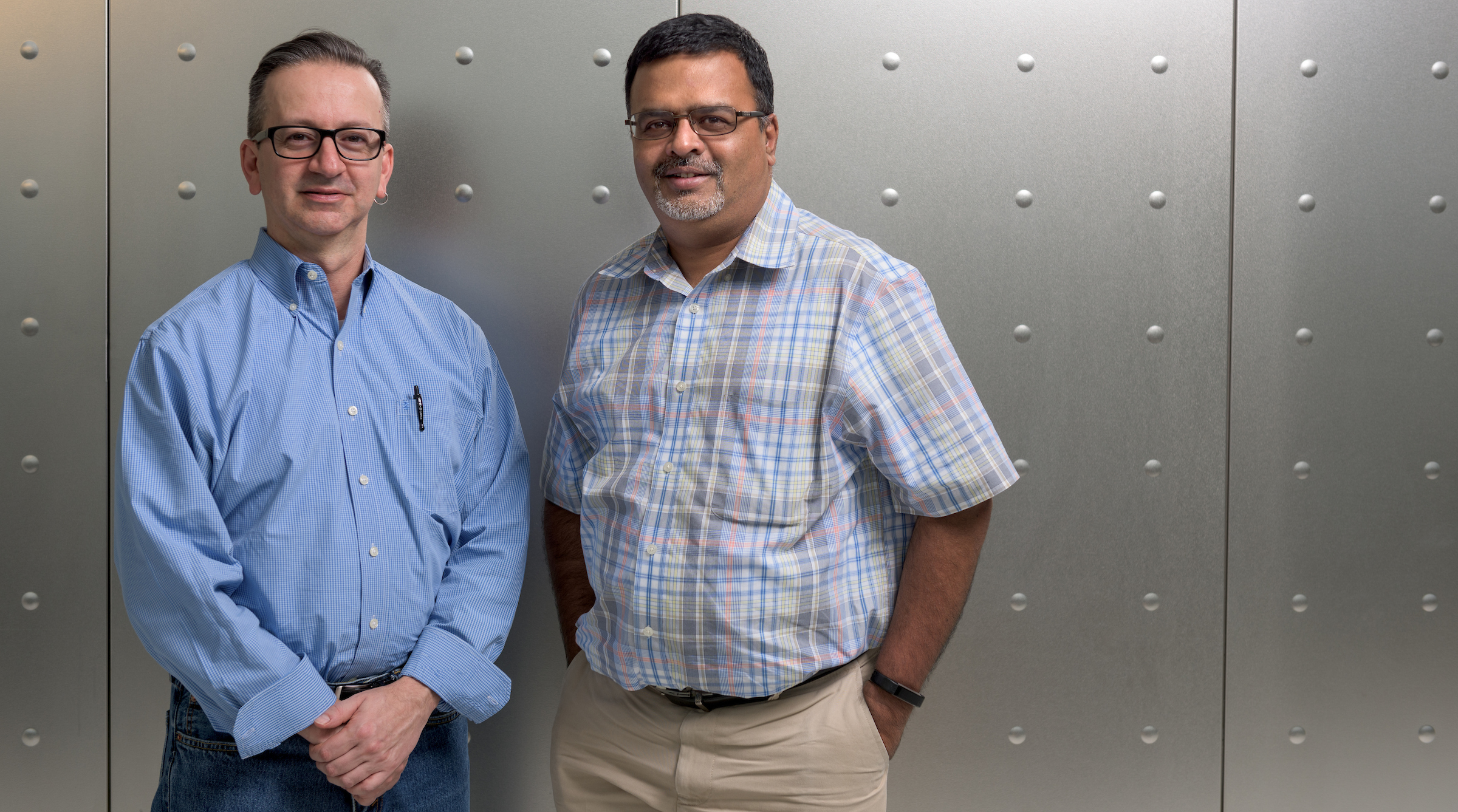
They say two minds are better than one, and in the case of Robert Alaniz and Arul Jayaraman, it’s true. They’ve been collaborating since 2008, and together, they are exploring the furthest reaches of the microbiome to create effective technologies for patients.
" What Dr. Jayaraman and I realize is that now and in the future, the most challenging and impactful questions in science cannot be answered by a single scientific discipline—we must forge innovative interdisciplinary research alliances that synergize for the next generation of discoveries.”
Robert C. Alaniz, PhD Research Assistant Professor, School of Medicine
Better together
They say two minds are better than one, and in the case of Robert Alaniz and Arul Jayaraman, it’s true. They’ve been collaborating since 2008, and together, they are exploring the furthest reaches of the microbiome to create effective technologies for patients.
"What Dr. Jayaraman and I realize is that now and in the future, the most challenging and impactful questions in science cannot be answered by a single scientific discipline—we must forge innovative interdisciplinary research alliances that synergize for the next generation of discoveries.”
Robert C. Alaniz, PhD Research Assistant Professor, School of Medicine